
Insomnia and Sleep Difficulties Among Expats in South Korea
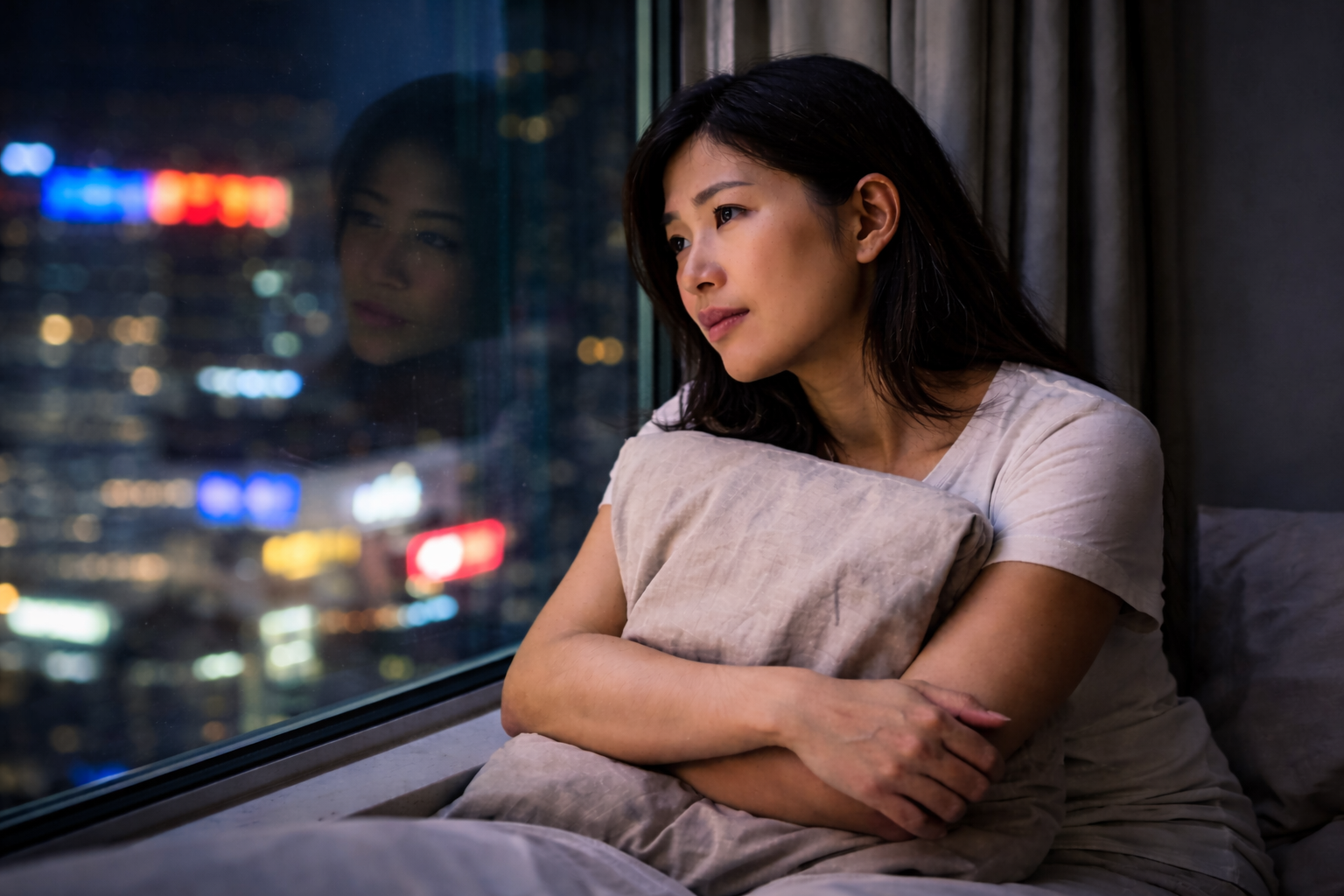
For many expats living in South Korea, insomnia or sleep difficulties don’t start in the bedroom—it starts in the nervous system.
You may be living in a modern apartment in Seoul, surrounded by convenience, safety, and efficiency. Yet at night, your body feels exhausted, but your mind won’t slow down.
Sleep difficulties are one of the most common mental health concerns among expats in Korea, particularly those navigating financial stress, work pressure, visa uncertainty, and/or cultural adjustment.
Why Insomnia Is So Common Among Expats in Korea
Insomnia among expats is rarely about poor sleep hygiene. More often, it reflects chronic psychological strain linked to living in a high-pressure, unfamiliar cultural environment.
The Psychological Cost of Being “The Outsider”
Even highly capable expats often find themselves quietly self-monitoring in social and professional settings, while feeling pressure to perform well as a foreigner within Korean systems. With fewer familiar emotional support networks and cultural norms that discourage visible struggle, stress can build internally over time, often without much opportunity to be openly expressed.
In Korea, endurance is often valued over expression. Over time, this can lead expats to suppress stress during the day, only for it to surface at night.
Financial Stress and Insomnia in Expats Living in Seoul
One of the strongest predictors of sleep problems among expats in South Korea is financial stress, especially in Seoul.
For many expats in Korea, financial stress is influenced by rising housing costs in Seoul, exchange rate fluctuations that affect income or savings, and the high cost of international school tuition or childcare. These pressures are often compounded by visa-dependent employment, ongoing financial support of family members abroad, and limited access to familiar financial systems, all of which can contribute to a persistent sense of financial insecurity.
In many cultures, financial stress is openly discussed. In Korea, however, money concerns are often kept private—leading expats to carry these worries alone. At night, our brain has the tendency to solve unresolved problems, often resulting in sleep difficulties.
Korean Work Culture and Its Impact on Sleep
Korean work culture can be especially challenging for Western and international professionals.
For many expats, insomnia is closely linked to work-related stress. Long or unpredictable hours, unspoken expectations to stay available, and hierarchical workplace dynamics can keep the mind on high alert even after the workday ends. Language barriers and the pressure to appear resilient or grateful often lead expats to carry stress quietly, making it harder for the body and mind to fully rest at night.
Many expats feel they must prove their worth continuously, which keeps the nervous system in a state of alertness—even after work hours end.
Emotional Isolation and Nighttime Anxiety
Even expats with active social lives can feel emotionally isolated.
Korea is a collectivist society, but belonging often requires deep cultural and linguistic fluency. Also, concerns about burdening others can lead many to carry stress quietly, deepening feelings of isolation over time.
These emotions often emerge at night, when distractions fade. Some common nighttime thoughts might include the following: “Did I make a mistake moving abroad?” or “What happens if my visa or job falls through?”
These concerns are normal—but deeply destabilizing when carried alone.
Signs Insomnia Is Affecting Your Mental Health
Chronic sleep problems often overlap with anxiety and depression, particularly among expats.
You may notice:
Persistent difficulty falling or staying asleep
Early morning waking with worry or dread
Emotional numbness or irritability
Reduced concentration and decision-making ability
Increased reliance on caffeine, alcohol, or sleep aids
If insomnia or sleep difficulties have persisted for several weeks or longer, it’s important to view it as a mental health concern, not a personal failure.
Therapy for Insomnia and Anxiety in Expats in Korea
Therapy provides a space where expats don’t have to explain or minimize their experience.
At MindFlow Psychological Services, we support expats by:
Exploring financial and work-related stressors
Processing cultural and identity-based challenges
Addressing anxiety, depression, and burnout
Helping regulate the nervous system to improve sleep
Many clients notice improvements in sleep before their external stressors fully resolve—because their internal experience becomes more stable.
You Don’t Have to Power Through This Alone
Insomnia can make life in Korea feel overwhelming, even when everything looks great from the outside.
Struggling to sleep does not mean you’re weak or failing. It often means you’ve been strong for too long without adequate support.
If insomnia or sleep difficulties are affecting your well-being, professional support can help you rest—both mentally and physically.
