
How Korea’s Summer Heat and Rainy Season (장마) Can Affect Your Mental Health
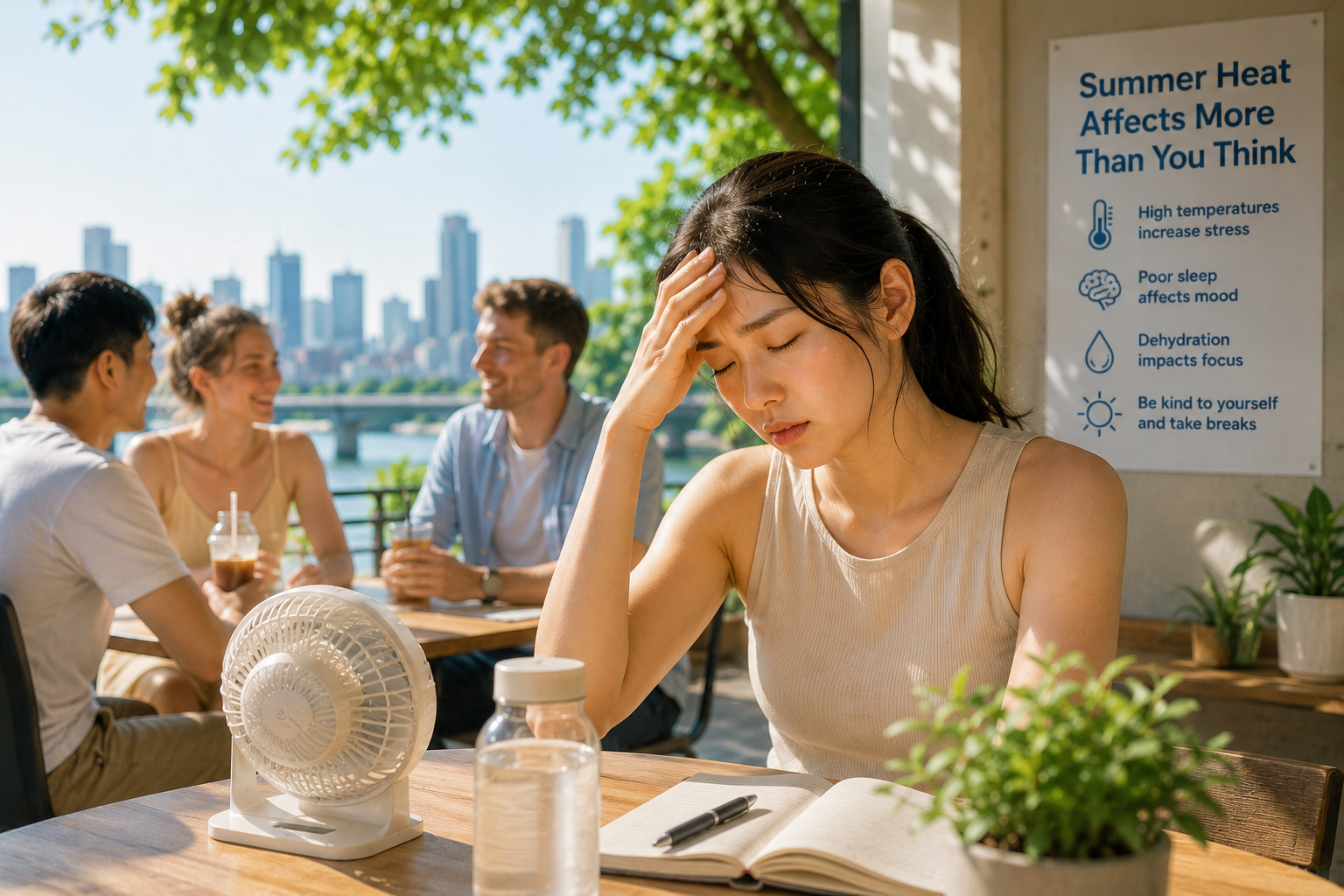
For many people, summer is associated with vacations, sunshine, and spending more time outdoors. But for others, it can become one of the most emotionally challenging times of the year.
In Korea, summer often brings not only intense heat but also the 장마 (monsoon/rainy season)—weeks of high humidity, heavy rainfall, and overcast skies. Together, these environmental changes can have a real impact on mood, stress levels, energy, and overall mental health.
If you’ve noticed yourself feeling more irritable, emotionally drained, anxious, or unmotivated lately, you’re not imagining it.
How Extreme Heat Affects Mental Health
When temperatures rise, your body has to work harder to regulate its internal temperature. This places additional physical stress on the body, which can also affect the brain.
Research suggests that extreme heat may contribute to:
Increased irritability and frustration
Heightened anxiety
Difficulty concentrating
Mental fatigue and brain fog
Lower tolerance for stress
Reduced motivation
People living with anxiety disorders, depression, ADHD, OCD, or other mental health conditions may notice that their symptoms become more intense during periods of extreme heat.
The Hidden Impact of 장마 (Monsoon Season)
While heat receives most of the attention, Korea’s rainy season can be equally challenging for mental well-being.
Days or even weeks of cloudy skies, heavy rain, and high humidity can leave many people feeling:
More tired than usual
Less motivated
Irritable
Restless from staying indoors
Reduced sunlight may also influence the body’s natural circadian rhythm and serotonin production, both of which play important roles in regulating mood and energy.
Even if you don’t experience seasonal depression during the winter, you may notice that prolonged gloomy weather affects your emotional well-being during the rainy season.
Poor Sleep Makes Everything Feel Harder
Both hot nights and humid weather can interfere with sleep.
When your body cannot cool down efficiently, falling asleep and staying asleep become more difficult. Even a few nights of poor sleep can increase anxiety, emotional sensitivity, irritability, and stress reactivity.
Sometimes what feels like “my mental health is getting worse” is partly the result of accumulated sleep deprivation.
Heat Can Mimic Anxiety
Summer heat naturally casues faster heart rate, sweating, feeling flushed, shortness of breath, and dizziness.
For people who experience panic attacks or health anxiety, these normal physical responses to heat can sometimes be mistaken for signs that something is seriously wrong, unintentionally increasing anxiety.
Ways to Protect Your Mental Health This Summer
Although you can’t control the weather, small habits can help reduce its impact.
Try to:
Stay hydrated throughout the day.
Keep your bedroom cool to improve sleep.
Exercise during the early morning or evening when temperatures are lower.
Spend time in air-conditioned or shaded spaces during extreme heat.
Open your curtains whenever possible during rainy days to maximize natural light.
Maintain a regular daily routine, even when the weather makes you want to stay indoors.
Stay socially connected instead of isolating yourself during long stretches of rain.
Practice self-compassion if your energy or motivation feels lower than usual.
Final Thoughts
Summer doesn’t affect everyone in the same way. While some people thrive in warmer weather, others find that Korea’s intense heat and long rainy season leave them feeling emotionally and physically depleted.
If you’ve been feeling more anxious, irritable, exhausted, or emotionally “off” this summer, know that you’re not alone. Paying attention to your sleep, hydration, routines, and emotional well-being can make a meaningful difference.
At MindFlow , we’re here to support individuals, couples, families, international students, and professionals through every season. If you’re finding that this summer has taken a toll on your mental health, reaching out for support is a sign of strength—and an important step toward feeling like yourself again.
